


In a world increasingly dominated by screens, schedules, and structured learning, parents and educators alike are seeking ways to reconnect children with nature, nurture curiosity, and instill valuable life skills. One such method is foraging - an ancient practice that not only teaches self-sufficiency but also deepens our connection with the natural world. And as spring emerges, bringing with it a bounty of wild foods, there is no better time to introduce children to one of the season’s most delightful offerings: wild garlic.
Foraging for wild garlic has become a special tradition for my daughter and I. For the past three wild garlic seasons, it’s become a cherished ritual for my daughter, Frida, and me. This time of year always feels a little magical—the moment we step outside, the unmistakable scent of garlic drifts through the air before we even glimpse those glossy green leaves. It grows abundantly where we live, pushing up through the earth along the lake banks and even through cracks in the concrete path, as if nature is reminding us of its quiet resilience.
Each spring, I take Frida’s hand and lead her into the woods, showing her how to recognise the tender young leaves before the flowers appear. Her small fingers carefully pluck a seed pod, rolling it between her fingertips before holding it up to her nose. She inhales deeply, eyes wide with delight, then looks up at me with the biggest smile - it’s a winner, I think! We take only what we need, just a handful, as I teach her the importance of foraging with care and gratitude.
Back home, Frida sits absorbed in our harvest, turning the leaves over in her hands, feeling their texture, studying their shape. When she is ready, she hands them to me to add to our meal. Sometimes we make wild garlic pesto, other times we simply stir it into pasta, but whatever the dish, the process itself - gathering, touching, smelling, and tasting - feels deeply meaningful. In those moments, we are not just cooking; we are connecting. To the land, to each other, and to the generations who have foraged before us.
Engage Your Senses
Wild garlic (Allium ursinum), also known as ramsons, is one of the most exciting plants for young foragers to discover. It grows in shaded woodland areas, often carpeting the forest floor with vibrant green leaves and delicate white flowers. It has a distinctive garlicky aroma that makes it easy to identify, reducing the risk of confusion with non-edible plants. The season typically begins in early spring, peaking in April and May.
Foraging for wild garlic is an engaging, sensory-rich experience that allows children to use their senses - sight, smell, and touch - to identify plants correctly. Unlike traditional classroom learning, where information is often absorbed passively, foraging is a hands-on activity that fosters deeper engagement and retention.
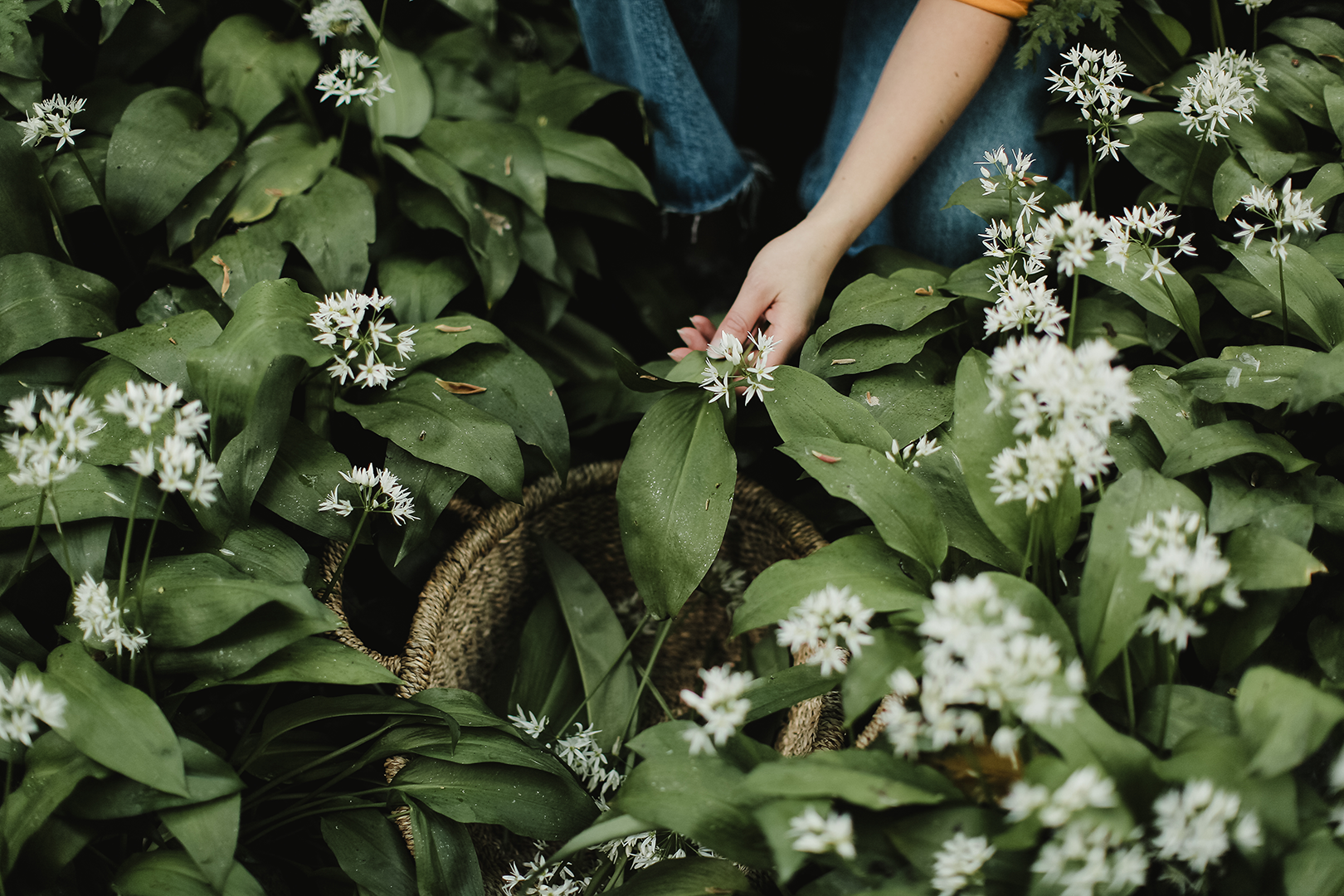
‘As wild garlic season arrives, there is no better time to step into the woods, breathe in the fresh air, and embark on a foraging adventure with your children’
How to Get Started
1 Choose the Right Spot
Wild garlic thrives in damp, shaded woodlands, particularly near streams and rivers. Parks and nature reserves often have plentiful patches, but always ensure you are foraging legally and responsibly.
2 Teach Ethical Harvesting
Encourage children to pick only a few leaves from each plant, leaving the roots intact so the plant can continue to thrive. Show them how to gather leaves gently without disturbing the surrounding environment.
3 Use the ‘Look, Smell, Feel’ Method
To build confidence in plant identification, teach children to:
- Look at the shape and colour of the leaves.
- Smell the distinct garlic scent.
- Feel the smooth, slightly waxy texture of the leaves.
4 Create a Foraging Journal
Encourage children to document their finds with drawings, pressed leaves, or notes on the location and season. This helps reinforce learning and allows them to track their foraging adventures over time.
5 Cook with Your Foraged Garlic
The best part of foraging is enjoying the harvest! Wild garlic can be used in a variety of simple, child-friendly recipes, such as:
- Pesto – Blend wild garlic leaves with nuts, parmesan, and olive oil for a delicious pesto.
- Garlic Butter – Mix finely chopped leaves into softened butter to spread on bread.
- Wild Garlic Frittata – Add chopped wild garlic to an egg-based dish for a nutritious meal.
Take Care
While foraging is a wonderful way to engage with nature, it is essential to do so with care. Some plants can be toxic, and it is crucial to correctly identify what you are picking. Always use multiple sources - such as field guides, foraging apps, or expert guidance - to verify your finds before consuming them. If in doubt, do not pick or eat a plant. Teaching children about responsible foraging ensures they develop a cautious and respectful approach to nature.
Foraging is more than just an enjoyable activity; it is a stepping stone toward a more sustainable future. By teaching children to recognise and responsibly harvest food from the wild, we empower them with knowledge that challenges the modern culture of convenience and consumerism. Understanding the natural world and how it provides for us fosters a mindset of conservation and appreciation.
Additionally, foraging opens the door to discussions about food miles, biodiversity, and self-sufficiency. As children grow, this awareness can influence their choices, from supporting local and seasonal produce to reducing food waste.
Including Frida in my foraging journey is something I hold close to my heart. I want her to grow up knowing that food isn’t just something bought in a shop, but something gifted by the land. That nature provides for us when we treat it with respect. If I could leave her with anything, long after I am gone, I hope it is this - a deep love for the wild, an appreciation for the abundance that surrounds us, and the simple, timeless joy of gathering food with her own hands.
As wild garlic season arrives, there is no better time to step into the woods, breathe in the fresh air, and embark on a foraging adventure with your children. The lessons learned among the green leaves will stay with them for a lifetime, shaping the way they see and interact with the world around them.
So, grab a basket, follow the scent of garlic, and let nature be your child’s greatest teacher.
Jess is a nature photographer, forager, and educator passionate about connecting families with the wild. She lives in Sheffield, close to the Peak District with her child, where she explores sustainable living through foraging, gardening, and photography. With years of experience leading nature workshops, she inspires others to embrace the wonders of the natural world.
MORE INSPIRATION
ENJOY More of Jess’ photography at jesspetrie.com
FOLLOW @her.wildness
EXTRAS We love this video from The Forager Within on how to prepare wild garlic and it's health benefits.