


Why one family left the school run behind, how child-led learning works day to day, and what the research says about children who learn at home
I have always found the school run painful. Both my older children cried a lot in the early days of pre-school and I was never comforted by the assurance that 'they always stop crying'. Instinctively this felt damaging but, like many parents, I also felt that it was simply 'what people did'; it didn't appear to be a choice. As a teacher, I kept a close eye on what was happening at the school and involved myself in the life of the school, joining the PTA and volunteering to run clubs and classes, as a way of seeing what went on. My daughter was finding schoolwork 'boring' and would roll her eyes at the daily phonics book and the weekly spelling test. She would ask me "Why do I have to read this book again?" and "Why are these the spellings we have to learn?" I floundered, trying to find genuine reasons for reigniting her motivation, and it killed me to hear my five-year-old already feeling suffocated by the pressure of work beyond the classroom.
So when she was verbally and then physically bullied by two older girls at the very start of Year 1, it was an easy decision to make. The school had been weak in their responses to the concerns we had raised about other matters, and this was no exception. We just withdrew her straight away, and our son too, thinking: "there has to be something better than this!" We didn't have a 'vision' to become home educators; we just thought "this is awful!"
What's the purpose of home education?
To raise happy, healthy, confident people who are able to live their own lives, and contribute to the world around them, in a meaningful way.
What are the benefits?
Freedom to develop intrinsic motivation to want to learn and contribute to society. Freedom from the bullying culture of school, and the healthy mindset that this cultivates. A broad worldview, as opposed to the limited experience of the classroom. A happier, more generous and far more ambitious character, having grown up removed from the narcissistic and self-serving obsession with grades and competition that is the primary focus of the school system.
How did your children handle the transition?
A lot better than us, actually! I think, as adults, we invest a lot of thoughts and feelings in our young children, which simply aren't their own. It's our emotional 'baggage', not theirs. After leaving school, there was obviously a period of time in which we were 'figuring out what to do' and hadn't yet established ourselves within the homeschooling community. I kept asking them: "Are you okay? Do you miss school, your friends, assembly?" I felt like I had maybe taken something away from them that was fundamentally important. But all I ever got back was a resounding "Nope!" They absolutely loved it; both of them. I didn't even attempt to get them to do any 'schoolwork' at the beginning, so they just played non-stop and we took advantage of the new freedom of home education by going on plenty of trips and visits to interesting places.
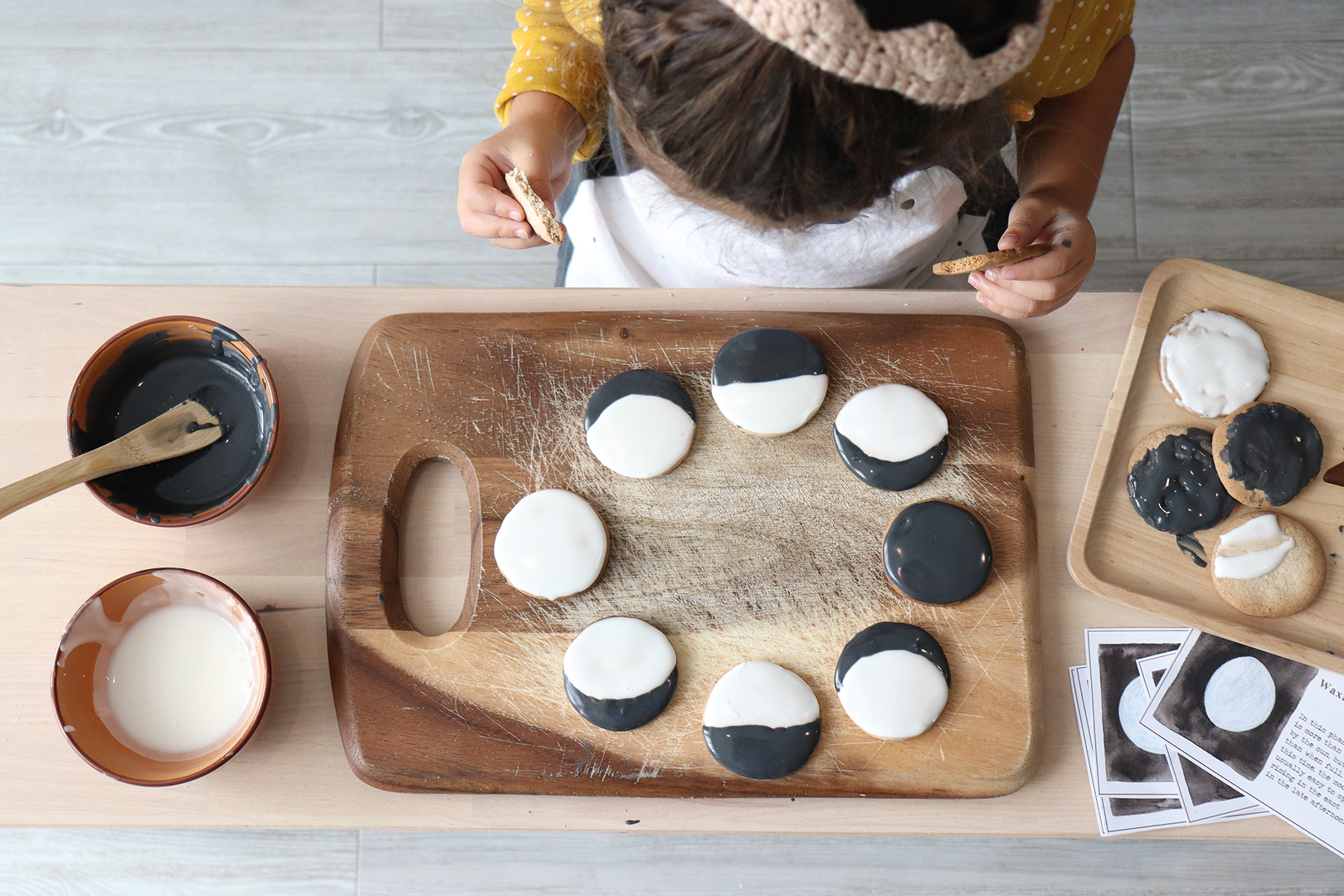
How do your children learn?
My children are autonomous learners, meaning that we let them 'lead' the learning, rather than following a prescribed curriculum. Like many people reading this, I would never have believed this to be possible until I saw the transition in my own children, and observed the shift from avoiding learning to actively seeking learning, which stepping out of mainstream schooling brings about. I would describe us as 'relaxed homeschoolers' as opposed to 'unschoolers', although we identify strongly with the ethos of this approach. If my daughter wants to spend the entire day in the hammock reading a book, then that's what she will do. Equally, if my son is playing with a friend and they come to us with a burning question about galaxies or dinosaurs, we facilitate their learning by helping them find the information they want; either online, in a book, in the encyclopaedia, or through conversation.
This is how my children learn, but it is by no means 'the only way' to do homeschooling. Many families are more structured than this and still have incredibly relaxed and mature children, who enjoy plenty of leisure time for socialising, sport and hobbies. There is so much to be gained simply by learning outside the narrow, institutional setting of school, that we mustn't get bogged down in the 'correct' educational method of homeschooling; the point is, everyone is different and home education allows for this diversity to be met meaningfully in every family.
Curriculums represent only what has been collated, and considered 'important', by a small group of people at any given point
How do homeschooled children socialise?
Home educated families tend to be very welcoming and the children typically play in mixed age and gender groups. There is freedom for children to be themselves in this space, whether they want to curl up quietly in the corner with a book, join in a rowdy imaginative game that is taking place, climb a tree outside, or flop on beanbags and chit-chat. With the natural 'levelling' and regulation of social behaviour that comes when children mix across a wide spectrum of ages and interests, there is almost never a squabble or dispute. Children gravitate towards the people who interest them and learn through observation the appropriate way to engage positively with each other. It is therefore far less incumbent on parents to be constantly 'policing' their children's interactions and hence, the homeschool community can be a space for your children to experience real social independence, as opposed to the false independence of school.
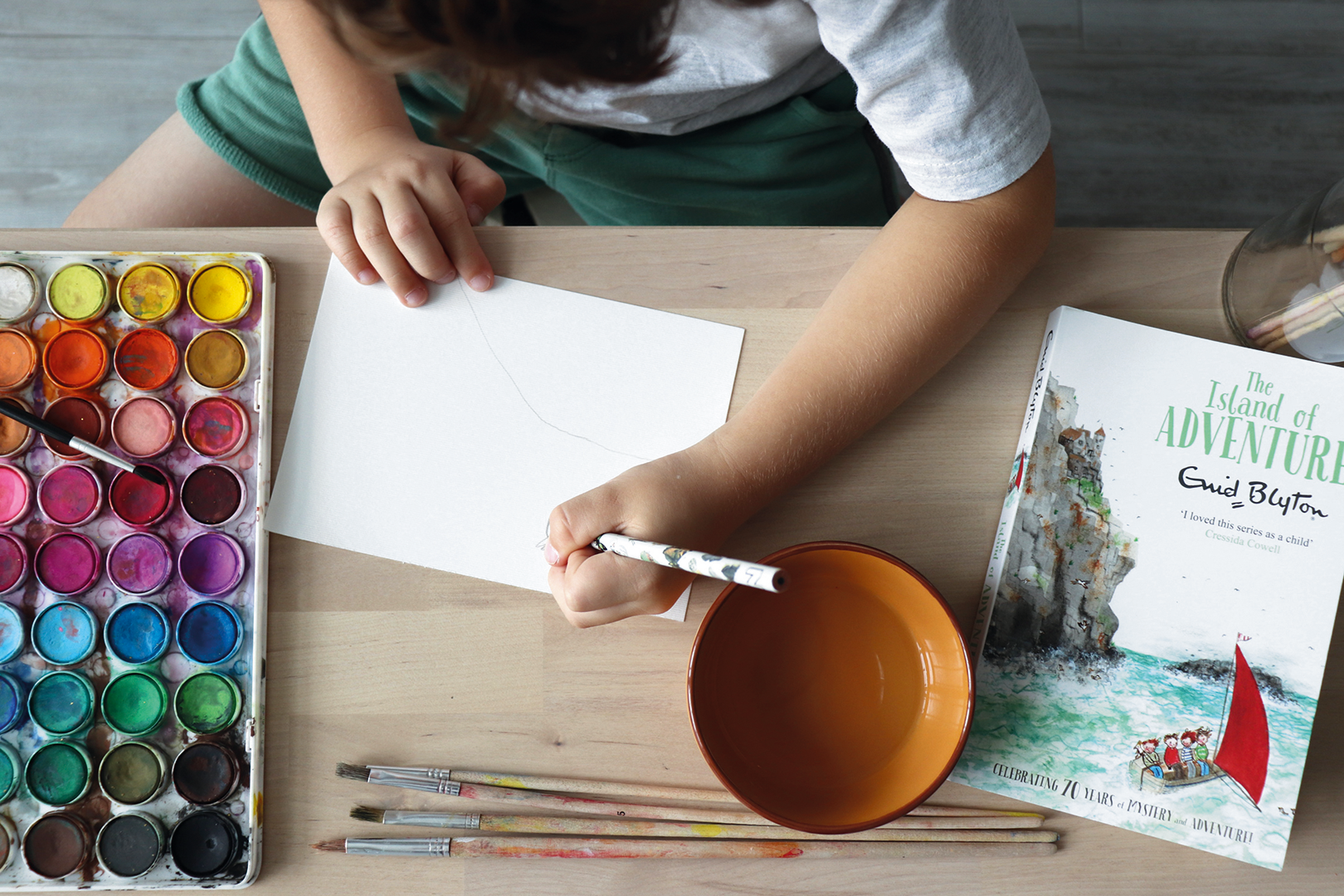
Does any reputable research exist on the effects of homeschooling?
Far more research has been conducted in the United States on this topic. Statistics from the National Home Education Research Institute show that homeschool students typically score 15 to 30 percentile points above public school students on standardised academic tests. Most notably, a 2015 study by the same institute found Black homeschool students to be scoring 23 to 42 percentile points above their public school peers.
In the UK, the whole area of home education is largely marginalised by government and given little constructive attention, other than when a reactive newspaper headline causes national hysteria at the misinformed impression of an 'underground network of waifs and strays receiving no education at all'. Nothing could be further from the truth, in the vast majority of cases. In fact, a study by Paula Rothermel concluded that 64% of home educated Reception aged children scored over 75% on their PIPS Baseline Assessment, compared to 5.1% nationally. The National Literacy Project also published findings which revealed that 80.4% of home educated children scored within the top 16% band on the normal distribution curve for literacy.
How does home learning vary from school?
Home learning comes in many different forms. Some families will take a more autonomous approach, like us, and some will be more structured, following a curriculum. Older children might tend towards self-directed online learning and preparation for courses or qualifications that they want to achieve. Regardless of the method though, all approaches to home education are united by their efficiency and flexibility. Even if you are following a structured approach, the amount of work that schoolchildren undertake in a day can be achieved in probably less than an hour of focused home learning. This is why the children you meet through homeschool groups and clubs are almost universally friendly, relaxed and easy to engage with. They are fundamentally happy and in charge of the majority of their own time, with plenty of hobbies and activities that enrich their lives, as well as a steady and meaningful friendship group. There are few children who can achieve this through the school system.
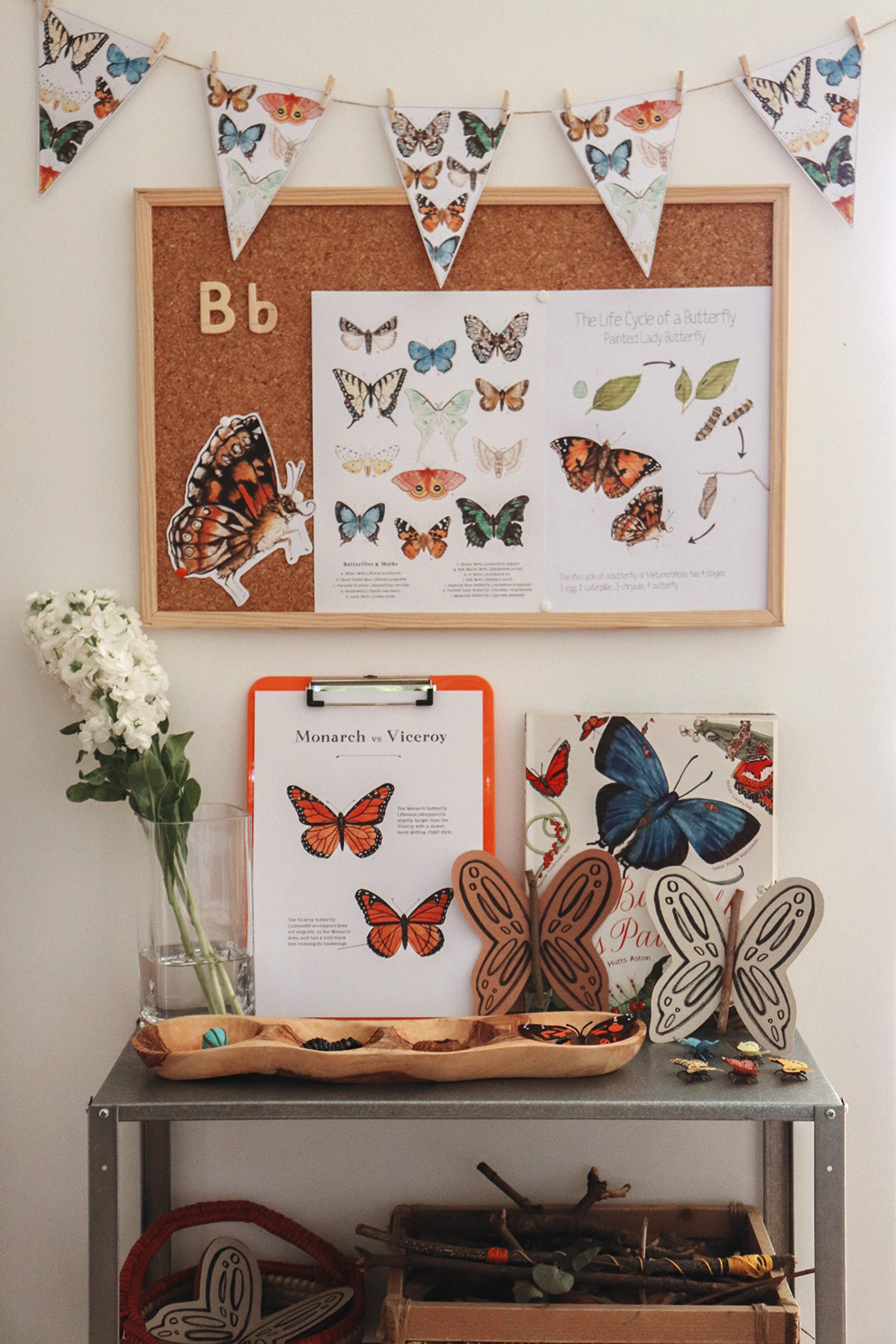
Why is autonomy so important?
This is such a big question. The whole concept of children requiring 'control' and 'discipline' (and hence, the reaction of children and teenagers against authority figures) is a uniquely modern position. In nature, we do not see the doe 'helicopter parenting' her fawn, nor do we see the autonomy of children inhibited in tribal cultures which still exist today. All mammals react to the gift of autonomy by 'switching on' their natural instinct and essentially 'upping their game'. This is intrinsic motivation in action. It is the same powerful instinct that drives us to sit up, walk, talk, feed ourselves, develop a sense of humour, and begin to draw on paper.
We are all highly capable autonomous learners from the moment we are born, and yet, just when things start to get really interesting, school single-handedly destroys this sense of wonder and discovery with its adult-prescribed checklist of 'what to learn and when', transforming an instinctive and functional process into an arbitrary hoop-jumping exercise. Can you imagine teaching children how to talk in this way? We would all agree that this approach dumbs our children down and inflicts on them an adult agenda that in no way reflects the true experience of learning; when your brain makes the connections for itself and searches, among the myriad pieces of information, for the relevant 'bits' to put the puzzle together. Consider the concept of gravity. If we never again explicitly teach this principle to a single child, does it mean that gravity ceases to exist? Of course not.
None of this was apparent to me before we began our homeschooling journey but, like most home educating families, we have learnt another way of seeing things; a way which considers the real human potential of children and sees their minds as fires to ignite, not buckets to fill.
Sees their minds as fires to ignite, not buckets to fill
What do children learn if they aren't following a curriculum?
First, we need to recognise that any curriculum represents an extremely narrow expression of the vast information that is 'out there' to be discovered in the world. Curriculums represent only what has been collated, and considered 'important', by a small group of people at any given point. Quite apart from the fact that curriculum-based learning can only ever touch the tip of the iceberg in terms of knowledge, curriculums can also represent a vision of history, geography, science, literature and the arts that is founded in a blinkered (we might even say supremacist) grasp of the world. For decades, we have been browbeating children with the lessons from the World Wars, for example, whilst failing to even engage with the enormous history of the planet and the very small space we occupy on that timeline as human beings.
I would welcome more cultural depth in the existing National Curriculum, as well as more transparency about our relative insignificance as a species; a shift which may be beneficial in cultivating a generation of children with less social division, better self-awareness, and greater respect for the planet. When children are removed from the shackles of curriculum learning, they are free to follow their interests and 'dive into' real, immersive, diverse learning rather than plodding, unit by unit, through prescribed content. Your role is not to 'teach them' but simply to show them where to look. Once children understand that the answer to any question they might have lies somewhere in a book, or a website, or an encyclopaedia, or research paper, or a human being whose knowledge can be tapped, then the world truly is their oyster.
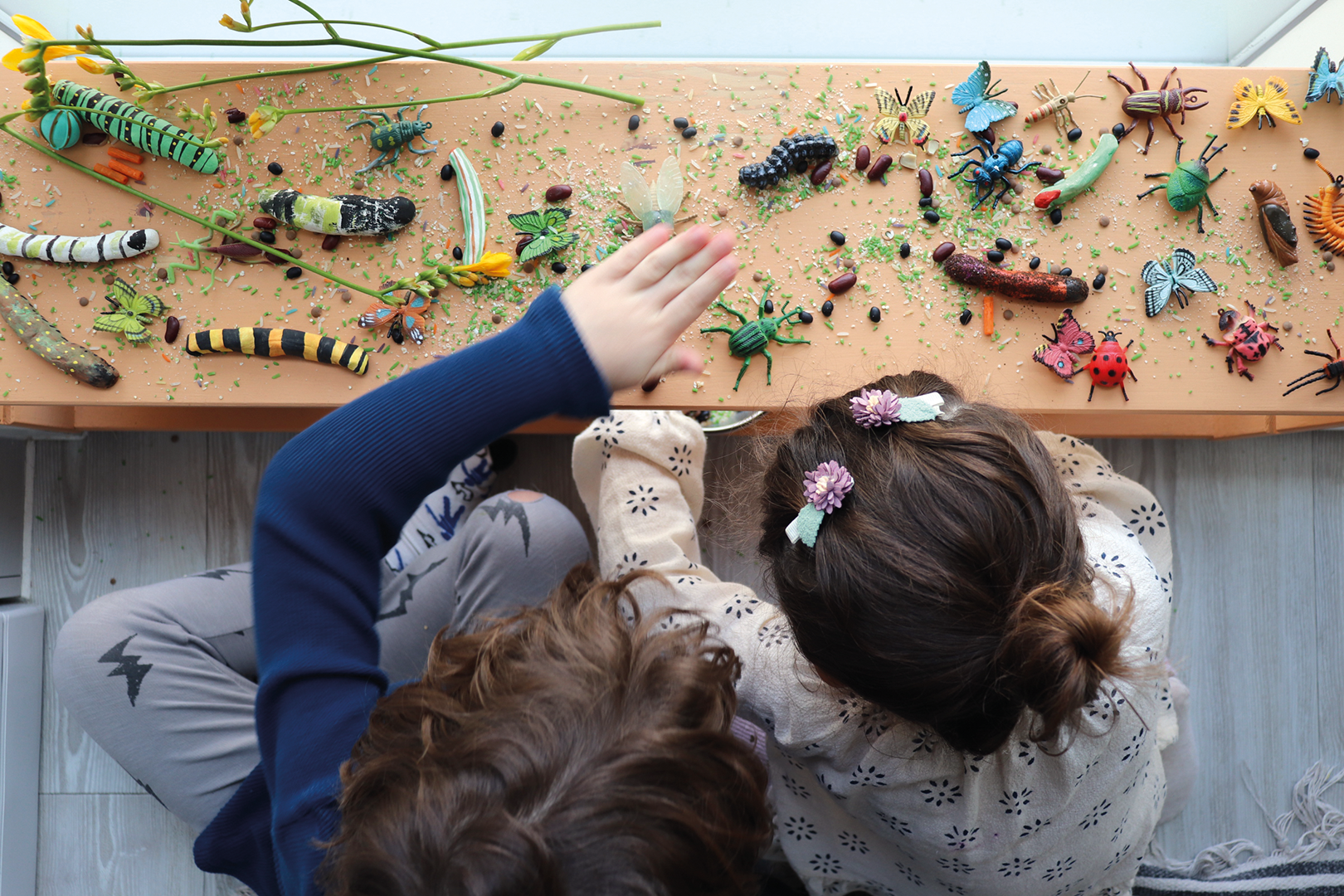
Your stories: how do you 'do' home education?
Chrissi Pegg: I have one daughter in school and one home educated. At home, we do a mixture of syllabus (The Good and The Beautiful) and other things. We use Pawprint Badges for exploring topics and earning badges. We also attend a few specific things: gymnastics, forest school, swimming lessons and piano lessons.
Kirsty Leanne Freakley: As a home ed kid myself from the 90s, I find I have a better relationship with my children and they are more stress free and free thinkers. We learn part of the curriculum subjects on certain days. But I let them lead and so far it's been a true learning adventure.
Laura Ivens: Our first official year of homeschooling was a bit all over the place. I have two boys aged four and six. We started off just letting them play and do their thing, but I tried to set up some type of routine. Then I tried themed days like Movement Monday, Teaching Tuesday and so on, but it put a lot of pressure on me to plan and set up activities, which my children weren't always into. So I let all that go and decided to go with unschooling. Now they choose what they want to do and will request Duplo, playdough, bubbles, board games, puzzles and other activities. They spend heaps of time outside exploring nature. They love helping out around the house, getting involved in food preparation, going shopping with us and being out and about. The learning is still there, it's just play based and hands on.
Jo Rose: We've gone from play based over the years to semi structured now she's 11. We loosely follow Exploring Nature with Children, with unit studies for English and science. It works for us as a family. We also attend weekly forest school, swimming lessons and theatre school.
Naomi Clarke: We do two hours of structured learning in the morning and then the rest of the day is free play and child-led activities. Lots of gameschooling!
More inspiration
READ The Case for Home Schooling by Anna Dusseau (Hawthorn Press)
Photography by Maria Chavarria, @gatherers.and.keepers


