


"Where do you get your protein?" After more than thirty years of plant-based eating, Robin Robertson has heard that question more than any other. Her answer is on the plate
Ever since I first began eating a plant-based diet (more than thirty years ago), the first question I am asked is, "Where do you get your protein?" This question comes out of a long-held myth in our society that eating animals is necessary to ensure adequate protein consumption. Nothing could be further from the truth. What is true is that you can get all the protein you need (and more) by eating a whole-food plant-based diet. Consider the plants-only diet of the strongest, most muscular animals in nature, such as the gorilla, elephant and horse. Many of our elite athletes are following suit, as more and more of them discover that plant-based diets give them a winning edge.
The bottom line is eating meat isn't required by the human body to supply enough protein. In fact, studies show that people can actually eat too much animal protein, whereas plant foods supply amino acids the body uses without causing an imbalance. Eliminating meat also reduces the risk of a number of health issues, but it doesn't reduce your ability to enjoy a satisfying meal. Still, the myth that plants can't supply enough protein remains one of the main reasons that people still include meat on their plates. I hope my recipes will help change that as people discover how easy and delicious it can be to get all the protein you need from the plants you eat.
You can get all the protein you need (and more) by eating a whole-food plant-based diet
Indonesian noodles with tempeh
Also known as bami goreng, these flavourful noodles are a popular dish in Indonesia. Tofu or seitan can be used instead of tempeh, if you prefer. Substitute rice for the noodles and you will have a dish called nasi goreng.
Makes 4 to 6 servings
Ingredients
- 225 g rice vermicelli (or use cooked ramen or cooked spaghetti)
- 2 tablespoons water, or 1 tablespoon avocado oil
- 70 ml tamari
- 225 g braised tempeh, cut into 1 cm dice
- 130 g peanut butter
- 140 ml coconut milk
- 2 tablespoons fresh lemon juice
- 1 to 2 teaspoons sambal oelek or other Asian chilli paste (depending on how spicy you want it)
- 1 teaspoon sugar
- 300 ml water
- 1 red pepper, deseeded and chopped
- 420 g chopped bok choy
- 1 large carrot, shredded
- 50 g chopped spring onions
- 3 garlic cloves
- 1 tablespoon grated fresh ginger
- 130 g frozen peas, thawed
- 35 g chopped unsalted dry roasted peanuts
- 2 tablespoons chopped fresh coriander
Method
- Soak the rice vermicelli in hot water until softened, about 5 minutes. Drain well, rinse, and set aside.
- Heat the 2 tablespoons of water (or the oil) in a large wok over a medium-high heat. Add the tempeh and 1 tablespoon of the tamari and cook until the tempeh is browned on all sides. Remove the tempeh from the pan and set aside.
- In a food processor, combine the peanut butter, coconut milk, lemon juice, sambal oelek, sugar and the remaining 4 tablespoons of tamari. Add 230 ml of the water and process until smooth, then set aside.
- Heat the remaining 60 ml of water in the wok over a medium-high heat. Add the pepper, bok choy, carrot, spring onions, garlic and ginger and cook, stirring occasionally, until softened, about 10 minutes.
- Reduce the heat to low and stir in the peas and the reserved tempeh. Add the reserved noodles, stir in the sauce, and simmer until the noodles are hot and well coated with the sauce. Serve garnished with the peanuts and coriander.
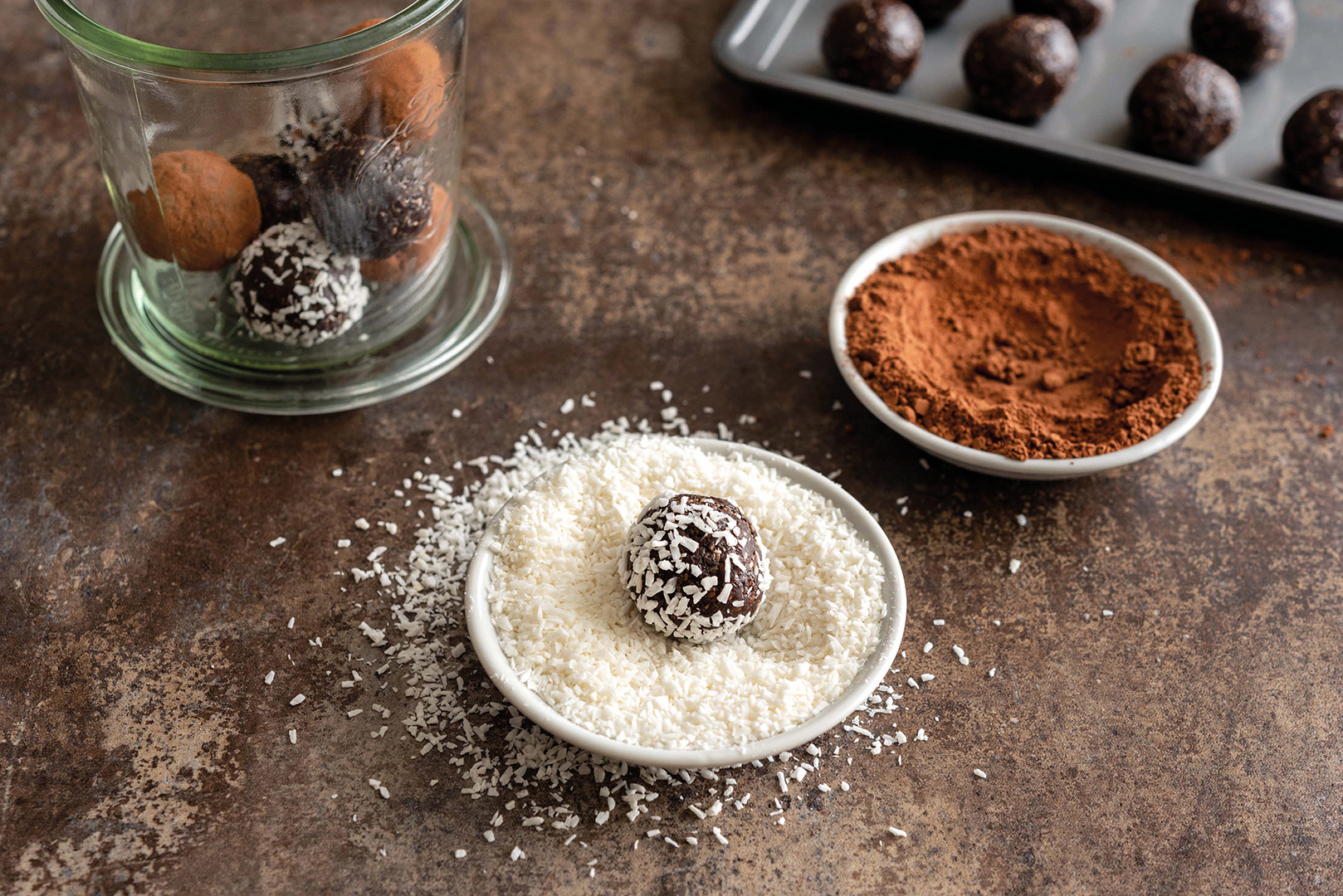
Two-seed chocolate truffles
These little bites are a delicious way to get a protein boost. Pop one or two after a workout or when you or the kids need a little burst of energy.
Makes 18
Ingredients
- 280 g soft Medjool dates, pitted
- 50 g walnut pieces, cashew pieces, or other nuts
- 45 g chia seeds, plus more if needed
- 30 g hulled hemp seeds
- 25 g cocoa powder, plus more if needed
- 1 teaspoon pure vanilla extract
- 30 g vegan chocolate chips, melted
- Water (optional)
- Ground coconut flakes or ground nuts, to coat (optional)
Method
- Line a rimmed baking sheet with baking parchment and set aside.
- In a food processor, combine the dates, walnuts, chia seeds, hemp seeds, cocoa powder and vanilla, and process until smooth and well mixed, scraping down the sides as needed. Add the melted chocolate and process until well combined. The dough should be sticky when pressed between your fingers. If not, add a small amount of water (a teaspoon at a time) and process until it comes together. If the mixture is too wet, add a little more cocoa or chia seeds.
- Roll the mixture into 2.5 cm balls and arrange on the prepared baking sheet. To coat the truffles, place some cocoa, ground nuts or coconut in a shallow bowl and roll the balls in the coating, then arrange on a plate. Refrigerate until firm, about 1 hour. Cover and store in the fridge for up to 3 days.
Pop one or two after a workout or when you or the kids need a little burst of energy
Why choose plant-based?
Health. According to numerous research studies, including those from the Harvard T.H. Chan School of Public Health, a plant-based diet can help ward off chronic diseases, such as diabetes, kidney disease and some cancers. It can help with weight loss, reduce the risk of heart disease and hypertension, lower cholesterol, prevent constipation and improve skin health.
Environment. Many of the root problems associated with the current environmental and world hunger crises can be traced to animal agriculture. For example, 60 percent of all water used in America is used for meat production; since the late 1960s, forests have been destroyed at a rate of 1 acre every 5 seconds to create grazing land for beef cattle; runoff from animal waste is linked to a 7,000-square-mile dead zone in the Gulf of Mexico; and it takes 7.25 kg of grain and over nine thousand litres of water to produce 455 g of meat.
Ethics. The realities of animal agriculture are more shockingly cruel and horrendous than most of us can imagine. Eating a plant-based diet can help end the needless suffering and deaths of millions of animals.
Economics. It can also save you money, both in the food you buy and in less frequent medical bills. Oh yes, and another thing: when cooked properly, plant-powered foods can taste great and be deeply satisfying.
Recipes from The Plant Protein Revolution Cookbook by Robin Robertson (Harvard Common Press).


