


Two plant-based recipes from Mind Food, chef Lauren Lovatt's book of food to support positive mental health.
Lauren's recipes grew out of her own mental health struggles, and they're about prevention rather than cure: simple, everyday food and rituals that can help all of us look after our brains. Here's a golden dauphinoise for when you need a little sunshine on your plate, and an overnight bircher for a calmer start to the morning.
Sweet Potato and Chilli Dauphinoise with Pumpkin Alguashte
Dauphinoise potatoes are the ultimate comfort food, and when we all need a little more light, the bright colours and spice in these potatoes help to bring a little sunshine to anyone's day. When I was studying for my degree, I would often make little batches of classic dauphinoise for days when I wasn't feeling so great. Having them ready to heat when I didn't feel like cooking was such a lifesaver. This recipe is a new and improved version of the potatoes I had in those darker times.
Serves: 6
Time: 1 hour, plus soaking
Ingredients
- 2 tbsp olive oil
- 1 large red onion, finely sliced
- ½ tsp salt
- 4 garlic cloves, crushed
- 500g sweet potatoes, washed and sliced into 2mm rounds
- 400g potatoes (I like Alouette), washed and sliced into 2mm rounds
- 200g cashew nuts, soaked for at least 1 hour in hot water, then well rinsed
- 1 tsp dried chilli flakes
- 3 tbsp nutritional yeast
- Freshly cracked black pepper
For the alguashte
- 100g pumpkin seeds
- ½ tsp dried chilli flakes
- ½ tsp smoked salt
Method
Dauphinoise
- Preheat the oven to 180°C fan.
- Heat the oil in a large saucepan. Once hot, add the onion and salt. Cook over a low heat for about 10 minutes until soft, but not brown. Add the garlic and cook for a further minute. Add all the potatoes to the pan with 400ml of water and bring to a simmer. Simmer the potatoes for about 10 minutes.
- Blend the soaked cashews with 400ml of water in a food processor or blender for 30 seconds to make a cream.
- Pour the cashew cream into the pan with the potatoes and add the chilli flakes and nutritional yeast. Simmer for 5 minutes until the potatoes are soft.
- Tumble the cooked potatoes and creamy sauce into a medium baking tray with reasonably high sides. Make the top layer of potatoes quite neat, then bake for 20 minutes, or until the top layer is golden brown.
Alguashte
- Place a small saucepan over a medium heat. Add the pumpkin seeds and toast until they start to pop. Once toasted, transfer the seeds to a pestle and mortar with the chilli and salt and grind everything into a dust.
- Remove the potatoes from the oven and leave them to sit for a few minutes to cool a little. You can eat the hot dauphinoise sprinkled with the alguashte just as it is, or serve with fresh leaves, grilled purple sprouting broccoli or massaged kale.
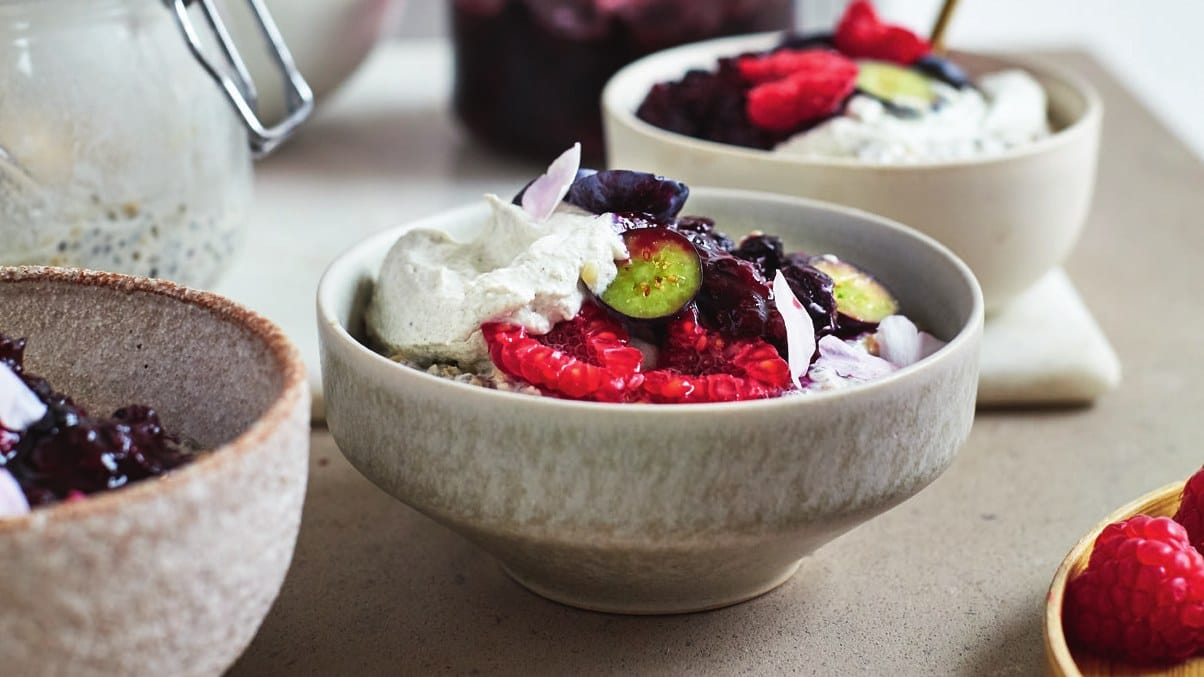
Omega Seeds and Ancient Oat Bircher
These overnight oats are designed to bring a moment of calm to any morning. When we are looking to bring balance to our brains, eating a simple breakfast within an hour of waking up is a good idea. These oats can be eaten alone or topped with seasonal fruits. You can also add a tablespoon of bee pollen for extra sweetness and a little buzz.
Serves: 2
Time: 5 minutes, plus overnight
Ingredients
- 200ml hemp milk
- 60g chia seeds
- 100g gluten-free oats
- 1 tbsp rose water
- 2.5cm vanilla pod, scraped, or ½ tsp vanilla extract
- ¼ tsp Himalayan pink salt
- 1 tsp ashwagandha (optional)
- 1 pipette CBD (optional)
Method
- Add all of the ingredients to a medium glass jar or bowl and whisk with a fork. Leave to sit for a few minutes and then whisk again, which will stop the chia seeds sticking together. If you have time, repeat the process for best results.
- Place the bircher in the fridge overnight and enjoy the next morning topped with fresh fruit, hemp yoghurt and bee pollen.
Have you heard of ashwagandha?
The name comes from the Sanskrit and is said to impart the 'strength of a horse', as it is regarded as one of the most powerful healing substances in Ayurveda. Ashwagandha most commonly comes in powdered form and is a nootropic, which means that it can improve cognitive function and provide a lot of neurological nourishment. Plus, its unique make-up is said to help serotonin production for an improved mood and resilience to stress.
These recipes are from Mind Food: Plant-based recipes for positive mental health by Lauren Lovatt (Leaping Hare Press, £20). Photography by Sara Kiyo Popowa.
This article contains affiliate links. If you buy a book through one of them, The Green Parent may earn a small commission at no extra cost to you, which helps support our independent magazine.


