


I was twenty-one years old, standing on a dirt-floored hut in Nicaragua, waiting for a hurricane to roll in, when I first understood what I would spend the next fifteen years trying to teach.
A young mother, maybe twenty, two or three small children clinging to her, was pulling a cloth nappy off a washing line as the rain began to spot the fabric. She looked at me with the kind of matter-of-fact calm that only comes from having long since run out of alternatives, and said in Spanish: “Mi un Pampers.” My one diaper.
Not my last one. My one.
I stood there trying to do the arithmetic and failing. She had children who, by any Western calculation, should have been in nappies. Multiple children. And one cloth square between them. The hurricane was coming. She was not panicking.
I spent the rest of that afternoon following her around. I had the Spanish skills and relentless curiosity and, as it turned out, she was happy to show me. She knew her children’s rhythms, the particular shift in posture, the slight stilling, and she responded by holding them over a patch of earth. That was it. No method. No milestone chart. No M&Ms. No stickers. No waiting until they showed signs of readiness. Just a mother, paying close attention.
I flew home weeks later and didn’t have the vocabulary for what I’d seen. It wasn’t until I became a mother myself, six years later, that I started hunting for it, scrolling through websites in three languages, clicking on pictures because I couldn’t read the text, until I found the term: Elimination Communication.
But here is what I want to tell you, all these years later. What I witnessed on that dirt road wasn’t a potty training method. It was a relationship. And it was, without anyone framing it that way, one of the greenest parenting practices on earth.
The Maths We Don’t Talk About
We talk a great deal in conscious parenting circles about nappies. Cloth versus disposable. Bamboo versus cotton. Whether our laundry detergent is certified. We are, most of us, trying. We mean well.
But we rarely extend that conversation into the territory of asking a more fundamental question: what if the goal wasn’t to use better nappies, but to use fewer?
The average child in the UK and United States today goes through somewhere in the region of five to seven thousand disposable nappies before they are toilet trained, though estimates vary, and the number depends heavily on when training begins. Each one takes an estimated several hundred years to break down in landfill. Not decades. Centuries. We will be long gone before the nappies we used this week have begun to decompose.
And here is the part that caught my breath when I first really sat with it: in 1957, approximately 92% of children in the United States were fully potty trained by eighteen months of age.
Eighteen months. Not three years. Not “whenever they’re ready.” Eighteen months.
That number increased, steadily and significantly, as disposable nappies became more convenient, as paediatric guidance shifted, as the message quietly calcified into cultural assumption: children aren’t ready until they’re ready, and there’s no rushing it. And today, the average age at which Western children are trained has drifted well past their third birthday.
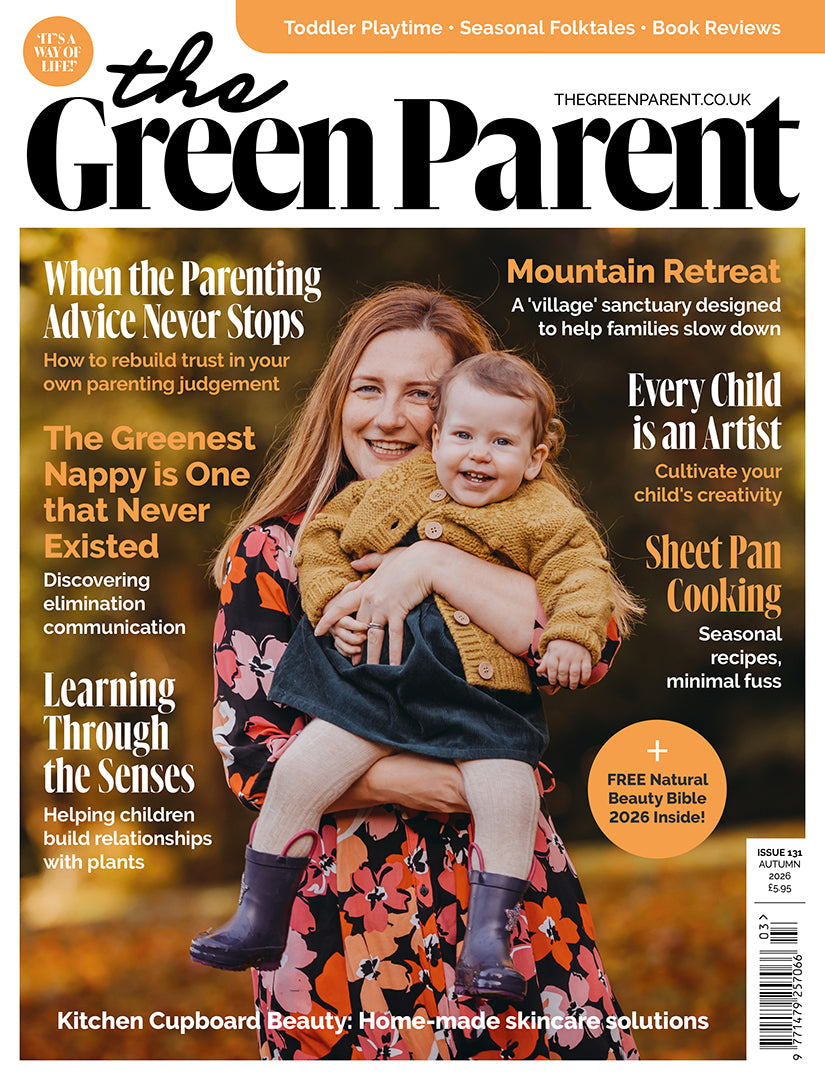
Want to read on? The rest of Michelle’s story, including what her daughter Poema taught her and how to lead potty training gently, without pressure, is in our autumn issue, out now.
Buy the print issue, £5.95 · Get the digital download
Michelle D. Swaney is the founder of The Potty School and author of The Complete Guide to Potty Training. She homeschools her children and specialises in potty training for children of all abilities.
