


How to celebrate the tastiest harvest fruit this season, with games, tastings and three simple recipes to make the most of a glut
When Apple Day was conceived over 30 years ago by the charity Common Ground, the aim was to create a new autumn holiday, a celebration of the diversity of fruit in the UK. It was held in 1990 in the old Apple Market in Covent Garden, bringing fruit back to the market after 16 years of absence. Sellers offering a wide variety of apples and trees rubbed shoulders with juice producers, and writers and illustrators of books about apples. Thousands of people came, and since then the celebration of the apple has spread to many villages and city markets. These events have boosted local pride and deepened interest in local distinctiveness.
Each year, at these celebrations, alongside tasting, juicing, baking, pruning and grafting, an imaginative array of games and creative activities have flourished, ranging from simple apple printing to mummers’ apple plays, new songs and poetry evenings. But invariably, year after year, the most popular event is the tasting and buying of numerous varieties of apples and the presence of an expert to aid identification.
With over 2,500 varieties of apple available here in the UK (7,000 globally), you could eat a different apple variety every day for over six years. Today, we’re in danger of losing not only those different apple varieties, but also the rich diversity of the landscape too. And the variety is not reflected in our shops. In a supermarket, you’ll find six or seven different apples: Gala, Braeburn, Golden Delicious, Granny Smith, Pink Lady and Jazz are six of the heavy cropping, uniform and branded club varieties that dominate. But it doesn’t have to be this way.
A heritage apple simply means an old fashioned, often regional fruit that isn’t commercially produced and sold. It’s quite a loose definition that usually means a variety dating back before 1950, but many of these apples are centuries old. As the name implies, they’re part of our social and cultural heritage, often preserving the names of places and people or words of dialect that might otherwise have been lost to us.
Why are old apple varieties endangered?
Since the industrial revolution, there’s been a gradual severing of our connection to the land which still continues. We work long hours and don’t have time to grow our own food. We have to live in towns and cities near to where the work is, in smaller and smaller homes without the space to grow.
The rise of supermarkets dealt another blow to fruit diversity, as under this retail model, produce had to be the same shape, size and colour, be able to withstand being transported across a national delivery network (or flown across the world) and be stored for months before being sold.
That’s the reason we ended up with big shiny apples like Red Delicious which have shelf appeal, and the ability to survive fourteen months in cold storage, but taste like weak tea with a sweetener. Apples like these crop heavily and have few issues with pests (nothing can get through the tough skin) but lack the rich, complex flavours of something less showy, like an Egremont Russet, for example.
As a consequence, the rich diversity of apples in the UK started to take a hit. The most endangered were the apples that don’t keep well, those that don’t crop on an industrial scale and those that are, well, a bit ugly.
Why are heritage apples important?
Homogeneity in pomiculture (fruit tree growing) is not just bad for our diets, but for the environment too. Different insect, bird and mammal species were happily evolving alongside specific tree varieties for thousands of years until industrial apples came along, then suddenly they can’t even bite through the skins. Cross breeding amongst as many different trees as possible is also important for the survival of fruit species.
Heritage fruit gives us a physical connection to our past, when we enjoy the same apples that our great grandparents would have enjoyed
Heritage fruit also gives us a physical connection to our past, when we enjoy the same apples (sometimes from the same tree) that our great grandparents and generations further back would have enjoyed. The names of orchards long since lost, events, people and even scientific discoveries are all commemorated in the names of heritage apples, as well as words that were once common.
No one wants to live in some kind of dystopia where all the apples are glossy, tasteless and exactly the same size, but if we want to save the old varieties, we have to support the growers and sellers of heritage apples. Better still, we can grow our own and preserve them for future generations.
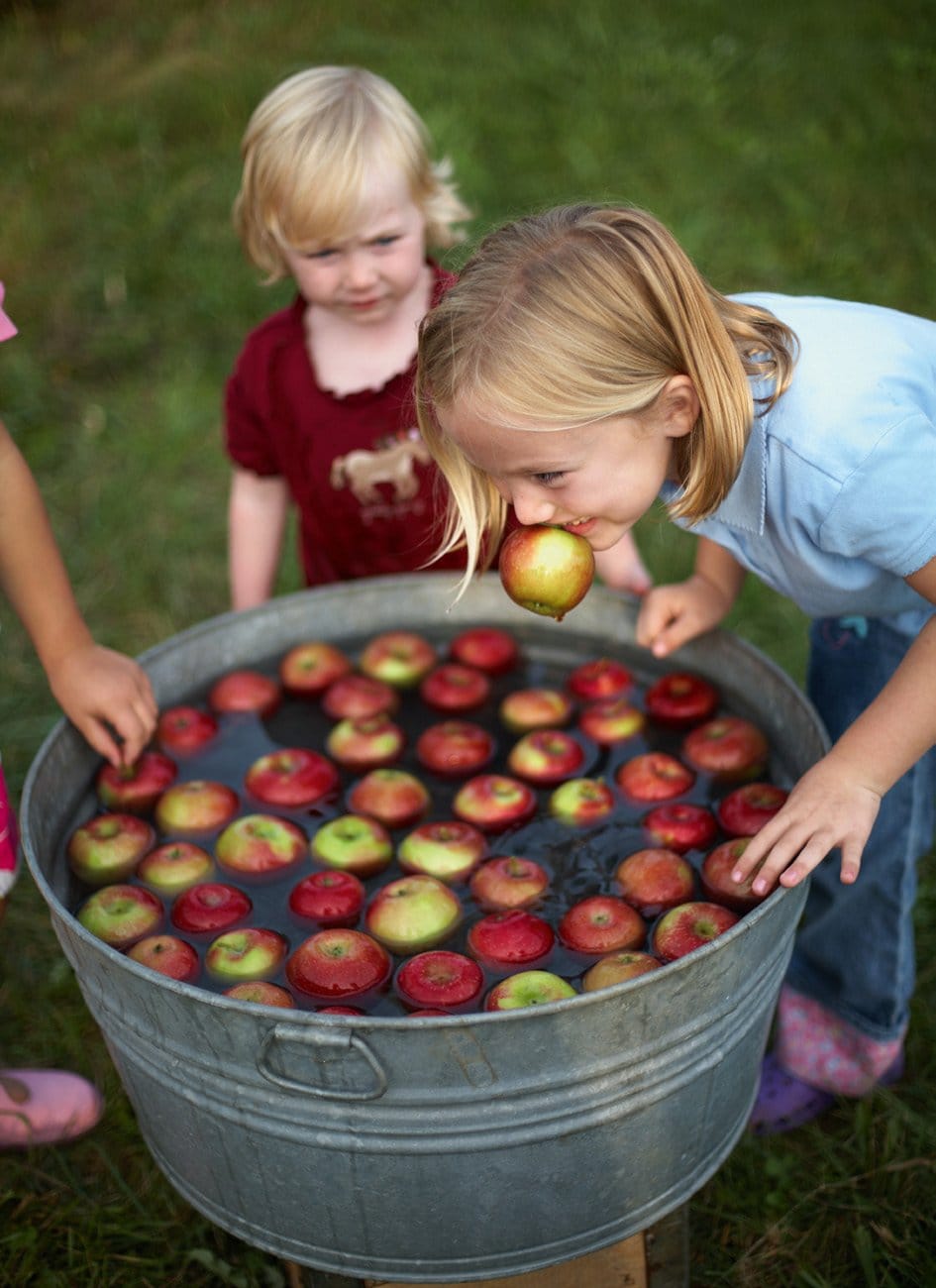
Create your own Apple Day
There are lots of events taking place in gardens and orchards that you can attend, but you could also create your own. Host it in a local park and invite friends and family too.
Apple tasting
There are thousands of varieties of apple, including some really ancient ones with amazing sounding names. Ever heard of Pendragon, Cornish Aromatic or Captain Broad? Why not gather as many different ones as you can and get people to take a taste of each, to really enjoy all the different flavours apples can offer? If you don’t have any from a garden or an orchard, a local farmers’ market, farm shop or even supermarket should have several different varieties. Another fun idea is to ask people who come along to bring an apple as an ‘entry fee’, which can then be used for all the activities suggested here.
Food and drink
Make sure there are some lovely apple dishes and drinks to try at your event. Invite neighbours, fellow gardeners or family to make something and bring it along. For people who do have an apple tree in their garden, it’s a good way to help them clear their glut! Try apple chutney or one of the recipes below.
Apple games
Both kids and adults love a silly game, and there are lots involving apples. Apple bobbing, for example, is where you fill a large tub with water and apples. The challenge is to try and catch an apple with your teeth while it’s bobbing around on the surface. The only rule is: no hands. Or try the longest peel competition: all you need is a few apples and a peeler. The challenge is to create a continuous length of peel from the apple skin. The person with the longest peel wins. Get more ideas from Common Ground’s Ideas for Apple Day guide.
Fruitful events
There are celebrations at orchards and farms around the UK every autumn. Find your nearest on the Orchard Network’s Apple Day map. Here are a few still to come this year:
Community Apple Day, Staveley, North Yorkshire: Saturday 24 October
Yorkshire Wildlife Trust’s community orchard hosts a day of orchard games, crafts and apple press demonstrations, with a cider press stall and an apple pie baking competition. Most activities are free. ywt.org.uk
Apple Week at Ampleforth Abbey, North Yorkshire: 24 to 31 October
A free half-term celebration with apple tastings, lawn games and apple-tossing races, a children’s orchard trail, apple crafts and pressing demonstrations at the abbey’s cider mill. ampleforthabbey.org.uk
Apple Tasting at Acorn Bank, Cumbria: weekends until the end of October
Sample freshly picked fruit from more than 165 varieties in Acorn Bank’s orchards. Try a Keswick Codlin, a Howgate Wonder or even a Pitmaston Pineapple! On Thursday 29 October, the gardeners are also juicing the harvest, with free tastes. Tasting is free; normal admission applies. nationaltrust.org.uk
Mark your diary for next autumn
Some of our favourite apple days take place earlier in October, so they’re worth noting for next year: the Apple Fair at Brogdale, home of the National Fruit Collection in Kent (brogdalecollections.org), the Apple Day Weekend at The Newt in Somerset (thenewtinsomerset.com) and Apple Day at Cambridge University Botanic Garden (botanic.cam.ac.uk).
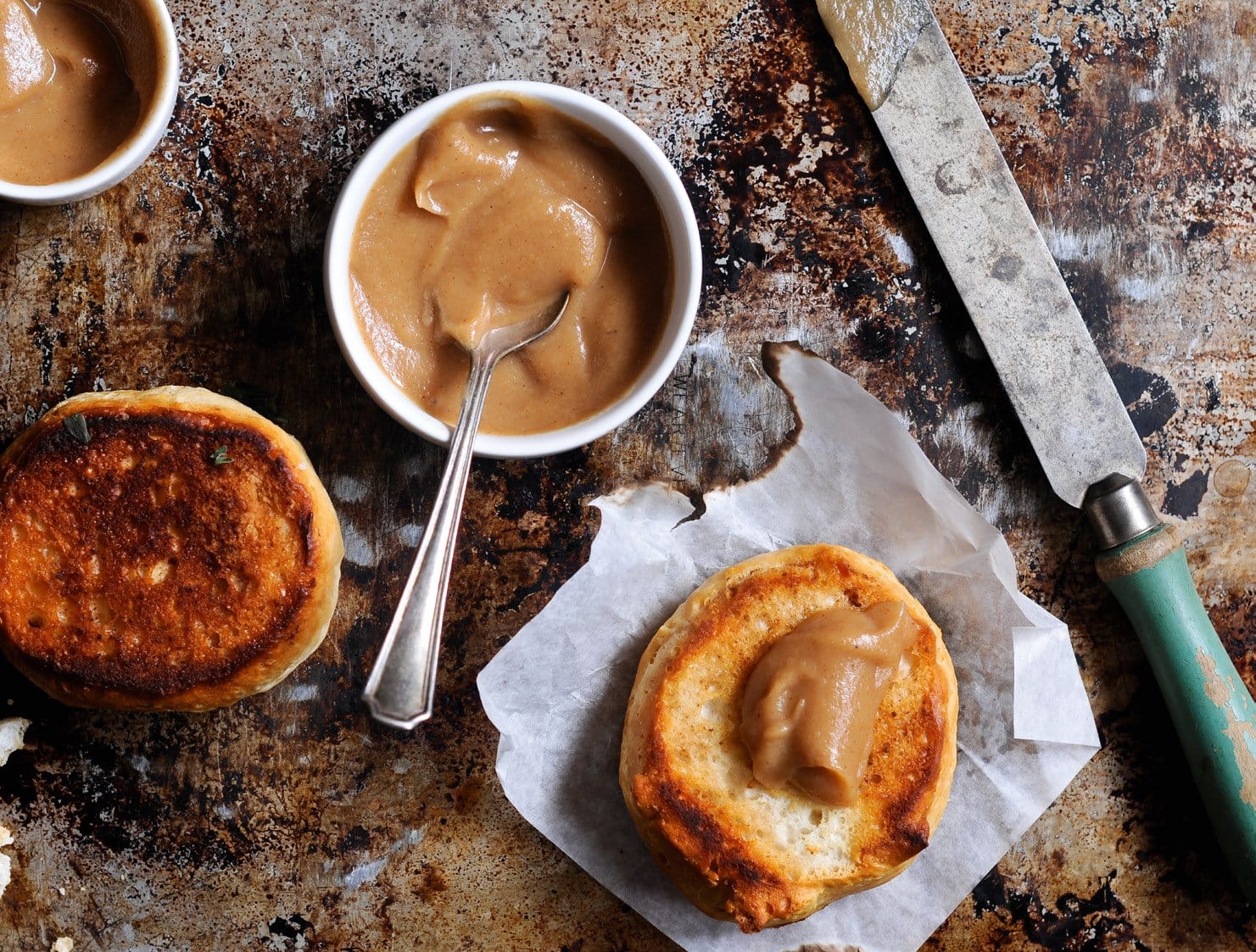
Make your own: apple butter
Lindsay Landis is the founder of loveandoliveoil.com. Here she shares a sweet way of preserving autumn fruit. Crisp apples cooked down with sugar and spices until lusciously smooth and intensely flavoured, this small batch apple butter is perfect when you just have a few apples to hand.
- Core and coarsely chop about 5 apples. Place the apple pieces and cores in a large saucepan along with 120ml water, 50g granulated sugar and 2 tbsp lemon juice. Bring to a simmer over a medium-high heat, then reduce the heat to medium-low. Cover and cook for 20 to 25 minutes or until the apples begin to soften and fall apart.
- Remove from the heat and run the softened apples through a food mill, discarding any remaining solids or seeds. (If you don’t have a food mill, blend the softened apples in a food processor or with a hand blender until smooth.) You should have about 2 cups of apple purée.
- Return the purée to the saucepan and set over a medium-low heat. Add 55g brown sugar to taste, along with ½ tsp ground cinnamon, a pinch of ground cloves and a pinch of salt. Gently simmer, stirring regularly to avoid spattering, until the apple butter is a deep caramel colour and thick enough to hold its shape on a spoon.
- Transfer to a jar or airtight container and keep refrigerated for up to 3 weeks.
Make your own: baked apples
- Preheat the oven to 200°C/gas 6. Grease an ovenproof dish. Wash 4 medium apples well and remove the cores.
- Using a sharp knife, make a cut just through the skin going all the way around the widest part of each apple. Place the apples in the dish (they should fit quite snugly) and push 25g pecans into the hollows.
- Add 40g butter, cut into cubes, to the hollows, then top up with another 25g pecans and drizzle over 4 tbsp honey.
- Pour 50ml water around the base of the apples and bake for about 25 minutes, or until the apples just start to split and puff up slightly, but don’t overcook. Remove from the oven and allow to cool for 15 to 20 minutes.
- Serve in deep bowls with yoghurt or custard and spoon over the buttery juices from the dish.
Make your own: apple bread
- Peel and core 2 large apples (about 500g), then cut into 2cm dice. Fry in a frying pan with 25g butter over a high heat for 2 to 3 minutes, until golden brown, then leave to cool.
- Place 450g brown and 450g white bread flour and 3 tsp salt in a large bowl. In a small pan, melt 75g butter, then set aside to cool slightly.
- Add 1 sachet of easy blend yeast, 50g caster sugar and the melted butter to the flour mixture. Add 175ml tepid water, a little at a time, and use your hands to bring it together into a kneadable dough. Now add the cooled apple cubes.
- If the dough seems too dry and won’t hold together, add a little more water. If it seems too wet, add a little more flour.
- On a lightly floured surface, knead the dough for 10 to 15 minutes until smooth and elastic. Put it back in the bowl, cover with a damp tea towel or lightly oiled cling film and leave somewhere warm until doubled in size, about 45 minutes.
- Knead the dough again for about a minute. Divide into 4 pieces, shape into round loaves and place on a lightly oiled baking tray. Leave to prove for about 30 minutes, then brush with a lightly whisked egg yolk. Bake at 180°C/fan 160°C/gas 4 for 35 minutes. Tap the bottom of each loaf: if it doesn’t sound hollow, bake for a few minutes more.
- Cool on a wire rack and serve with a cheeseboard.
More inspiration
Celebrate: get ideas for your own Apple Day events with Common Ground’s Ideas for Apple Day
Discover: the benefits of community orchards
Find: an Apple Day or orchard near you


