


What does a typical day look like for a child here — and how does it differ from a conventional school day?
With children ranging from 3 to 16, a typical day can look quite different depending on the age of the child! For those aged 3 to 6 in our kindergarten, the focus is self-directed play — in our kindergarten space, the school garden, or the woodland next to the school. Our downstairs classes, for children aged 3 to 11, are structured to give lots of opportunities for play, inquiry, project-based learning, movement and time outdoors, with learning gradually becoming more formal as children move through the school and prepare for GCSEs — we currently offer 12 subjects. Older children usually attend four hour-long lessons a day across a broad and balanced curriculum.
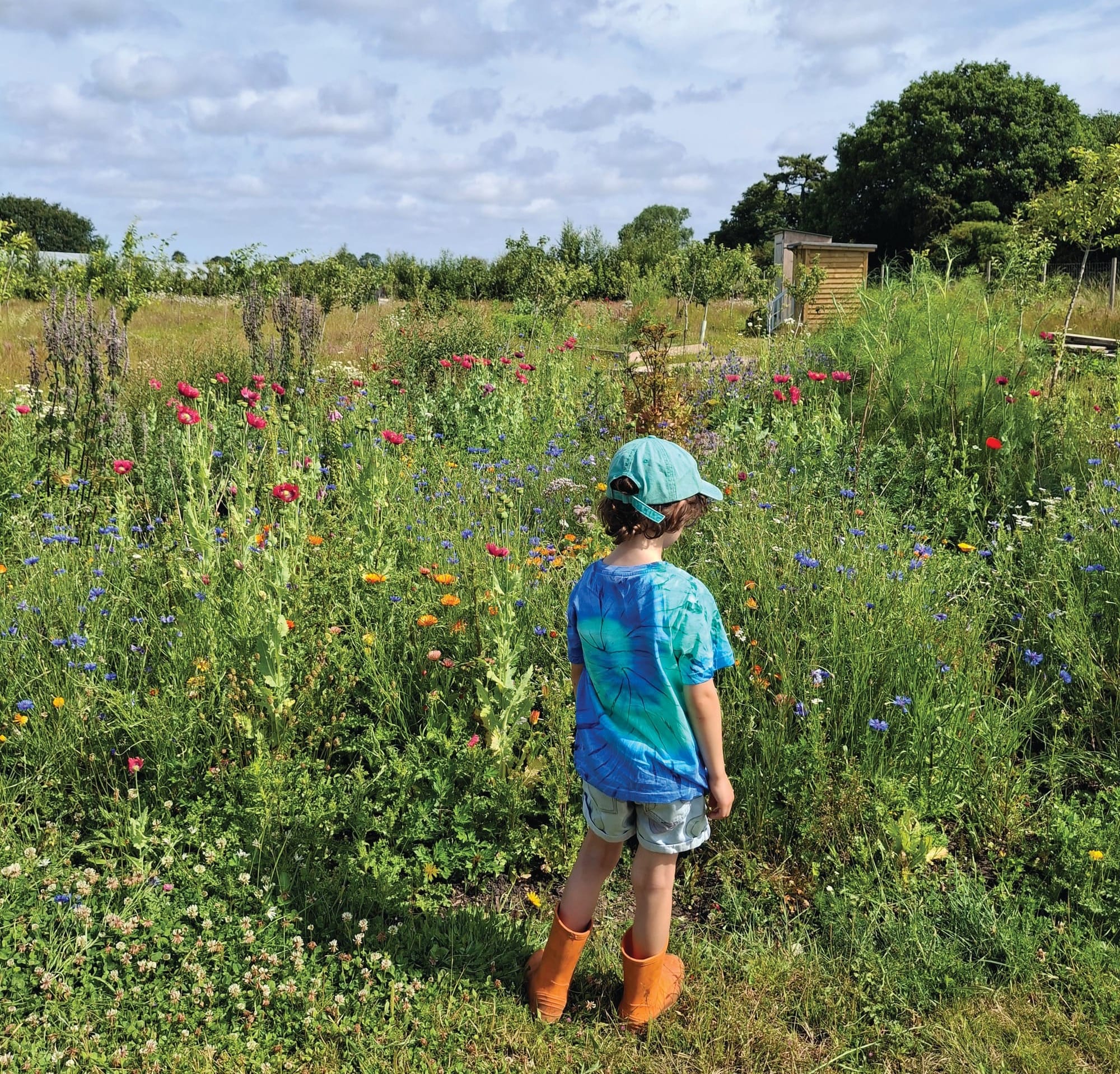
School starts at 9:30am, allowing a gentler-paced start for families. Children don't wear uniforms, and we love the creative, colourful clothes many wear to school — this also matters for those with sensory preferences who really benefit from wearing what they feel comfortable in. All our children have longer breaks than they might in a conventional school: at least half an hour in the morning and an hour and fifteen minutes at lunch. At the end of the day, children often stay and play in the playground or woods with their parents, helping them transition gently from school and fostering the strong community bonds we're so proud of.
What do young children need most in their earliest years of learning, and how does your setting provide that?
We believe the two things children need most are nurture and space to grow. Our kindergarten is a highly nurturing space, with high adult-to-child ratios and a genuine ethos of love and care. It's primarily play-based, giving children aged 3 to 6 the space to grow in a relaxed environment, free from the pressures children face in so many school settings from such a young age. The space is filled with interesting books, toys and resources — a stimulating environment for them to explore and learn about the world at their own pace.
"The key is finding the right balance between predictable routines and space for "going with the flow" — that's where the true magic of early years education lies"
How do you balance freedom and structure for very young children — and why does that balance matter?
Whilst our kindergarten is primarily play-based, clear rhythms and routines are built into each day, and these are incredibly important for giving young children a sense of security and predictability. The key is finding the right balance between predictable routines and space for "going with the flow" — that's where the true magic of early years education lies. Alongside self-directed play, there is gentle structure woven in: yoga sessions, stories, circle times, craft activities, Spanish songs and games. By balancing self-directed activity with a gentle introduction to more structured learning, we prepare our youngest children for their transition into Class 1 in the academic year they turn 7.
How do you approach assessment — and how do you talk to parents who worry about grades and outcomes?
Our approach to assessment reflects our overall approach to learning: ensuring it's truly age-appropriate and reflective of the needs of the child, something we believe is so often missing in mainstream education. As children approach GCSEs, from around 12 onwards, assessment becomes gradually more formal while remaining as individually responsive as possible. For children younger than 12, it's very much about formative assessment, enabled by our small classes — no more than 12 — and the close relationships between pupils and teachers. With over 30 years of experience, we're confident this approach works. We'll always create space to reassure concerned parents that, in our experience, a gentle start — in which children grow holistically, socially, emotionally and spiritually as well as academically — gives them the best possible foundation for the academic learning that becomes more of the focus in later years.
How involved are families in their child's learning, and what does that relationship look like day to day?
As a small school with around 65 pupils, we really value the strong relationships we build with parents, and we create space for them to check in informally with teachers at the start and end of each day. We communicate regularly through a Google Classroom learning environment and actively look for opportunities for parents to support and contribute to their children's learning. We welcome them into school to discuss and see their children's work, and to contribute to the school community more widely — helping create equipment in the school garden, reading individually with children, or discussing their working lives as part of our careers provision.
What does risk and challenge look like in your setting — and why is it important not to wrap young children in cotton wool?
Exploring risk and challenge are such important parts of children's growth, and being involved in choices about what is and isn't safe helps foster autonomy and self-reliance. An overly risk-averse culture can limit children's potential for growth — and take the fun out of playtime! We try to strike a healthy balance between our role as adults in keeping children safe and giving them freedom to explore risk in appropriate ways. We take an active, engaged role in supervising children in the garden and forest, so that rather than simply saying "no" to an activity, we can ask, "How can we find a way to do this safely?"
How do you support children who find it hard to separate from parents, or who arrive with anxiety or sensory sensitivities?
Even with everything we do to make school a safe, welcoming space, some pupils — especially very little ones — may find it hard to separate from parents at first. We take a gentle approach: better to build confidence gradually, step by step, than create anxiety around separation that becomes a bigger issue. Our youngest children often start with just a couple of mornings a week in kindergarten, building up their hours as they grow in confidence and independence. We also recognise that many children — and adults! — have sensory sensitivities. Elements of our school culture work well here, such as having no uniform, so children can wear what feels comfortable. Our small classes help avoid the busy, noisy classrooms many children find challenging, and we have pastoral support throughout the school for children experiencing anxiety.
New Forest Small School has around 65 pupils aged 3 to 16 and offers 12 GCSE subjects. www.newforestsmallschool.com


