


Five feathered contenders, five stories of struggle and hope. Voting is open until 22 November, so pick your favourite and make it count
The RSPB’s Bird of the Year competition is back for a second year, and voting opens today. More than 52,000 people took part last year, crowning the Swift their favourite. This time the reigning champion faces last year’s semi-finalist, the Lapwing, plus three newcomers: the Greenfinch, the Gannet and the Montagu’s Harrier.
Every bird on the shortlist was chosen because it faces real pressure, from habitat loss and disease to a changing climate, and because the RSPB is working to help it recover. ‘There is certainly tough competition this year,’ says RSPB wildlife expert Charlotte Ambrose, ‘with each remarkable species facing adversity and deserving of a crown.’
RSPB President Dr Amir Khan will be casting his vote too. ‘As a doctor, I know how important spending time in nature can be for our wellbeing,’ he says, ‘and birds help us feel connected to the natural world around us.’
It’s a lovely one to do with the kids. Read up on all five, then hold a family vote before you make it official.
Montagu’s Harrier
The UK’s rarest bird of prey is a slender, long-winged beauty weighing just 225 to 450g. No successful nests were recorded here between 2020 and 2024, and the species faces riskier migration routes and hotter, drier wintering grounds. There is a glimmer of hope, though. Since 2025 the RSPB has worked with farmers and landowners to protect a male known as AU, who has fledged ten chicks in two years at a secret location.
Gannet
Famous for their high-speed fishing dives and built-in crash-helmet skulls, Gannets nest in vast, noisy colonies. Bass Rock in Scotland is home to one of the largest in the world, but bird flu and climate change have cut its numbers by nearly a third since 2022. The RSPB took on the island as a nature reserve in June and is working with the Scottish Seabird Centre to give its birds a brighter future.
Swift
Last year’s winner eats, drinks, mates and even sleeps on the wing, reaching speeds of 69mph and staying airborne for up to ten months at a time. Its screaming call is the sound of summer, yet for every ten Swifts in our skies in 1995, there are now just three. A shortage of nest sites is a likely cause, and anyone can help by fitting a Swift box or Swift brick to their home.
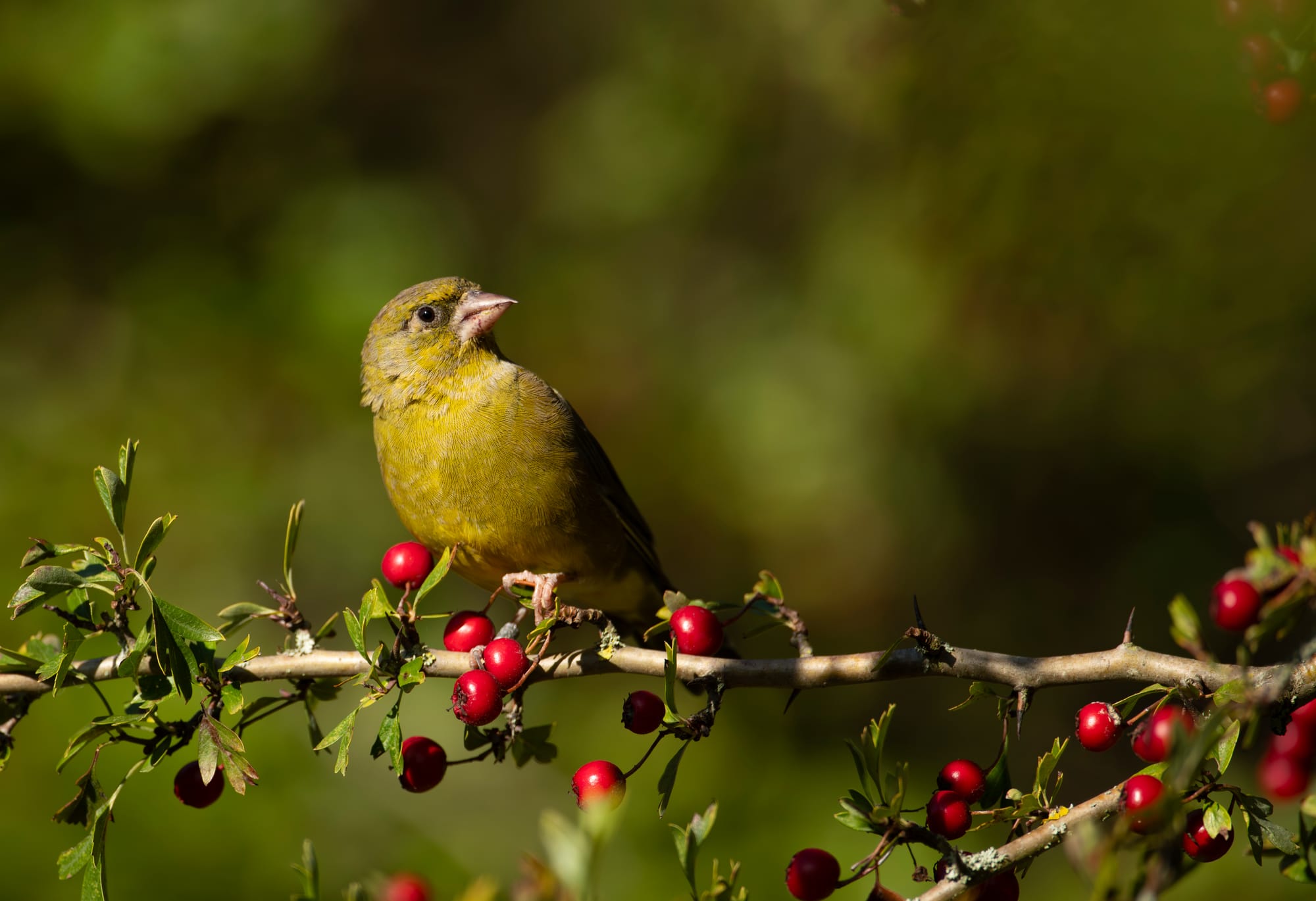
“The Greenfinch is a cheerful garden regular that can sing, perform aerial displays and even do impressions.”
Greenfinch
With its wheezy twitter and flash of yellow and green, the Greenfinch is a cheerful garden regular that can sing, perform aerial displays and even do impressions. Numbers have fallen by more than 65% in 30 years, largely due to trichomonosis, a disease spread through contaminated food and water. The risk is highest in summer and autumn, at busy feeders and on flat bird tables, so the RSPB has updated its advice to help us all feed garden birds seasonally and safely.
Lapwing
Known for its otherworldly ‘pee-wit’ call and wild, tumbling spring display flights, the Lapwing has inspired more folk names than almost any other British bird. Breeding numbers have dropped by around two thirds since the 1960s as intensive farming has taken away places to nest, and the RSPB is working with farmers to restore the habitat Lapwings need to feed, breed and flourish.
Cast your vote
Voting is open until 10pm on Sunday 22 November, and the winner will be announced on Saturday 28 November. Vote for your favourite on the RSPB website.

